
Decision Risk at Leadership Level
- Company
- enthus · IT service provider · around 500 employees
- Challenge
- In around 45% of final interview rounds, candidates were equally qualified, with no consistent framework for comparison.
- Result
- Around 25% fewer internal alignment loops in final interview rounds.
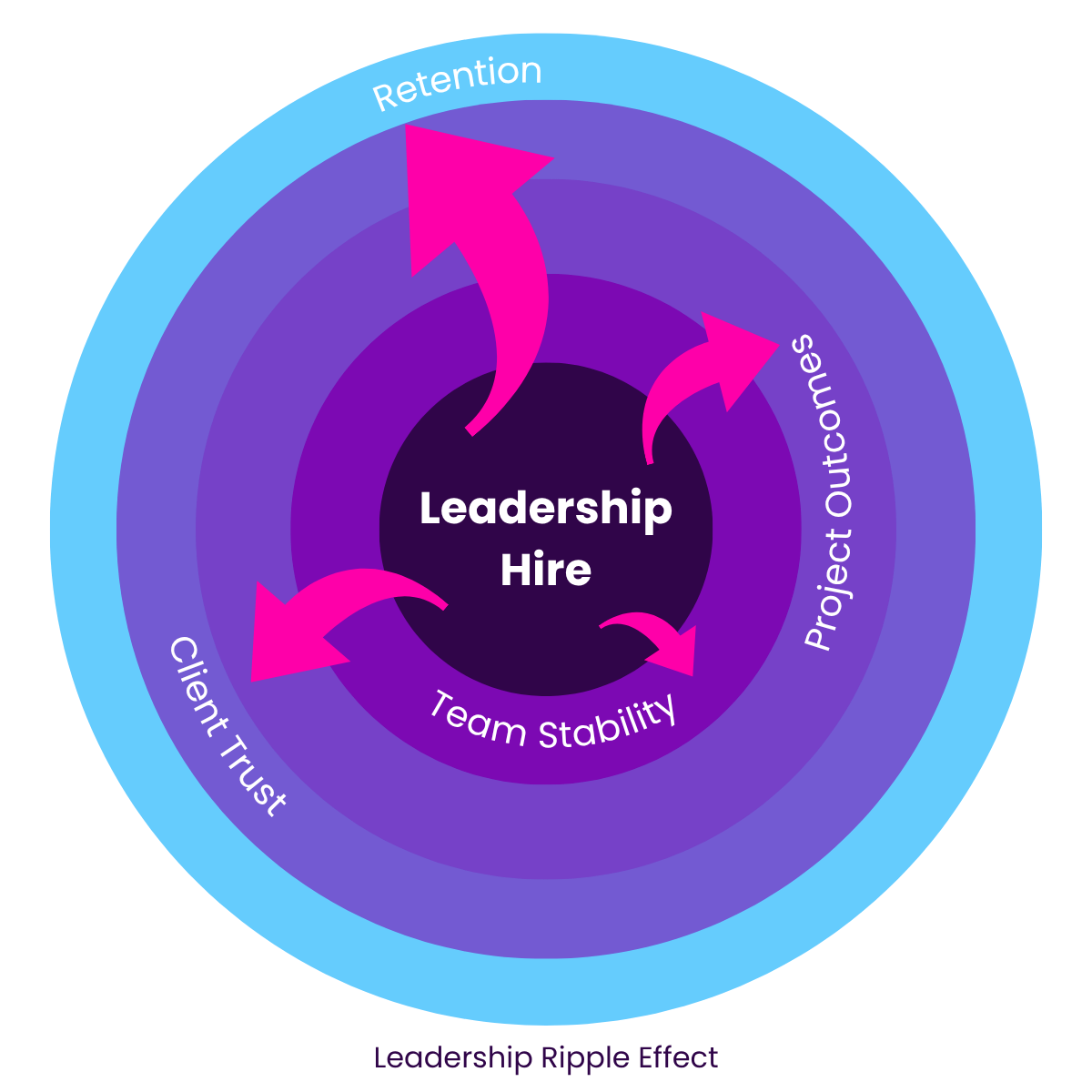
At enthus, leadership is not just about managing teams. It directly influences project stability, client relationships and the long-term retention of high-performing professionals.
With this level of impact, hiring decisions at leadership level carry significant business risk.
To structurally reduce this risk, enthus introduced a clearly defined decision standard in its leadership recruitment process, adding objective, data-based diagnostics as a complementary layer to existing selection methods.

When professional qualifications are no longer the differentiator
With around 500 employees, enthus operates as an IT service provider in an environment where stable project teams and resilient leadership are critical to performance.
The evaluation of professional qualifications was already well structured: role-specific expertise, experience and functional competencies were assessed systematically. What proved more difficult was the structured assessment of personal and cultural fit.
Rich interviews, but interpretative
Values, mindset and ways of working were discussed extensively in interviews, yet these discussions often remained interpretative and dependent on individual perception.
For an organization that fills multiple leadership roles each year, this level of subjectivity is not a marginal issue: it represents a structural business risk.
From interview-based impressions to structured decision logic
enthus no longer wanted to interpret cultural fit exclusively through interviews. The objective was not to replace the existing selection process, but to enhance it with a systematic and comparable personality assessment framework. By integrating Zortify, enthus added an objective diagnostic layer to its decision-making process.

The combination of validated psychometric measurement and AI-supported analysis of open-text responses creates a structured, evidence-based evaluation of three dimensions:
Personality traits
Entrepreneurial capital
Potential counterproductive tendencies

Consistency instead of situational judgement
Today, in leadership recruitment, HR and hiring managers receive a structured diagnostic report that provides clear insights into personality profiles, cultural alignment and potential risk factors.
Importantly, implementation did not require a redesign of existing processes. The assessment was integrated as an additional reference framework within the final evaluation stage.

When multiple candidates are equally convincing, fit is no longer debated abstractly. It is assessed against clearly defined, data-based criteria.
Reducing risk where it matters most
In leadership hiring, the primary economic lever is not process speed, it is risk mitigation. Poor hiring decisions at this level have a multiplier effect: they influence team stability, project outcomes and client trust.
By integrating objective diagnostics into its leadership recruitment, enthus has structurally strengthened decision quality and positioned HR as a strategic business partner, moving from process facilitator to evidence-based advisor.
Culture as a measurable decision dimension

enthus
“For leadership roles, professional qualifications alone are not enough. What matters to us is that candidates align with our values and convictions.
When candidates are equally qualified, Zortify helps us identify the individual who is the stronger cultural fit for our organization and our way of working.”
With this step, enthus has established a clear decision standard in leadership hiring:
Bring the same clarity to your leadership hiring
Let’s talk about how ZortifySelect can support your next leadership decisions, or write to us at hello@zortify.com.